In medical devices, a medical check valve is a precision molded part that joins or controls a fluid line within IV sets, drip flow control and bag or bottle access. It is designed for a secure, repeatable seal, made from medical-grade plastics, and produced in high volume for single-use assemblies by suppliers such as ' . bfaq_company_name() . '.
Definition
A medical check valve is one of the small standardized parts that make a medical fluid path work. Its job is to connect, seal or control flow between two segments of a line, and it is manufactured from device-qualified plastics for reliable single-use performance.
Because the part sits directly in the fluid path, three things matter most: a dependable seal, dimensional consistency from part to part, and a material that is compatible with the fluid and the chosen sterilization method.
It helps to picture where the part sits. A finished single-use device — an IV set, a transfer line, a dialysis circuit — is an assembly of molded plastic pieces joined into one fluid path. Each piece has a narrow job, and the value of standardization is that pieces from a catalog snap together predictably, so an assembler can design around known interfaces instead of bespoke fittings.
Types and Variations
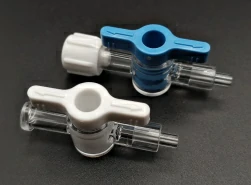
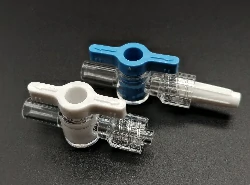
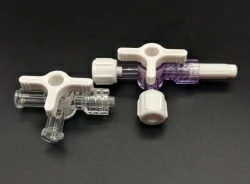
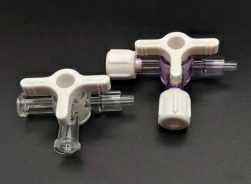
Within this category there is real variety. Connectors come as male and female halves, as slip or locking styles, and as straight, elbow, tee, Y and cross geometries for branching a line. Valve and stopcock versions add directional control — one-way check valves, two-way and three-way stopcocks — while spike and drip-chamber parts handle bag or bottle access and visual flow indication. Clamps and regulators occlude or meter the line, and caps and plugs seal ports during assembly and shipping.
Baixin Bio produces these variations as standard catalog series, so an assembler can usually find a close match before considering a custom tool. Where a variation is not stocked, it becomes a straightforward OEM or ODM project because the surrounding interfaces are already standardized.
Key Advantages
Where medical check valve earns its place, it is for a handful of practical reasons:
- Standardized interface that interoperates with compliant luer components
- Leak-resistant seal that holds under normal line pressure
- Single-use design that supports sterile, disposable workflows
- Medical-grade resin selected for fluid compatibility
- Dimensional consistency across production lots
- Smooth fluid-contact surfaces for reliable connection
In short, the component earns its place by being unremarkable in the best way: it fits, it seals, it is available, and it behaves the same every time, so engineering attention can go to the device rather than the fitting.
Common Applications
The settings that rely on medical check valve include:
- Laboratory fluid handling
- Irrigation sets
- Disposable diagnostic devices
- Syringe and pump connections
- IV infusion sets
What links these applications is risk. Each one moves fluid into or out of a patient or a sample, so a leak, a wrong connection or a contaminated surface has consequences. Standardized single-use components reduce that risk by making every junction predictable and by being discarded rather than reprocessed, which is the safer default for most modern disposable devices.
How to Specify and Choose
When you select a component, work through these variables before requesting a quote:
- The working pressure the junction must hold without leaking or separating
- The fluid and its chemical compatibility with the candidate resin
- The inner and outer diameters of the tubing the part bonds to
- The sterilization method the finished device will undergo
- Whether the part is single-use or intended for limited reuse
With those answers in hand, a supplier can confirm a standard part or scope a custom one without back-and-forth. Sharing a drawing or a physical sample removes the remaining ambiguity.
Industry Standards
From a compliance standpoint, the component sits at the intersection of connector standards and material standards. The ISO 80369 family governs small-bore connection geometry to prevent misconnection, while biocompatibility documentation and a validated sterilization route — EO, gamma or autoclave — establish that the molded material is acceptable for its intended contact.
The reason the standards landscape moved toward ISO 80369 is patient safety: when every line used the same luer taper, it was physically possible to connect, say, an enteral line to an intravenous one. The newer series give different applications deliberately incompatible geometries so a dangerous misconnection cannot be made by accident. For a component maker, that means confirming which series an application requires before specifying a part.
This page is informational and does not replace device-specific regulatory or validation guidance. Confirm exact standards, biocompatibility and sterilization requirements for your product with your quality team and your supplier.
Frequently Asked Questions
Can I request samples?
Yes. Samples and drawings are welcome and recommended before committing to volume. Use the inquiry form to request them.
Is medical check valve available for OEM or ODM projects?
Yes. Baixin Bio manufactures to drawings and samples, customizing material, color, dimensions, packaging and assembly. Send your specification for a quote.
What materials are used?
Depending on the part, medical-grade PC, PP, PVC, ABS, PE or POM is used, selected for the connection method, fluid path and sterilization requirement.
How is it sterilized?
Components are compatible with validated single-use sterilization such as ethylene oxide, gamma irradiation or steam autoclave, depending on the resin. Confirm the method for your device.
Is it compatible with ISO 80369?
Luer interfaces follow small-bore connector conventions. Confirm exact ISO 80369 series compatibility for your application with Baixin Bio before specifying.
Related Products

Related Questions
Explore More
Need Medical Connectors or Components?
Baixin Bio manufactures luer connectors, valves, drip chambers, clamps, caps and tubing, with OEM and ODM customization. Send your drawings or samples for a quote.
Request a Quote